
What Descript Is Best At — and Where It Fits in a Modern Content Stack
Descript is easiest to understand when you stop thinking of it as “just a video editor.”
Its core value is that it turns media into something you can edit through text.
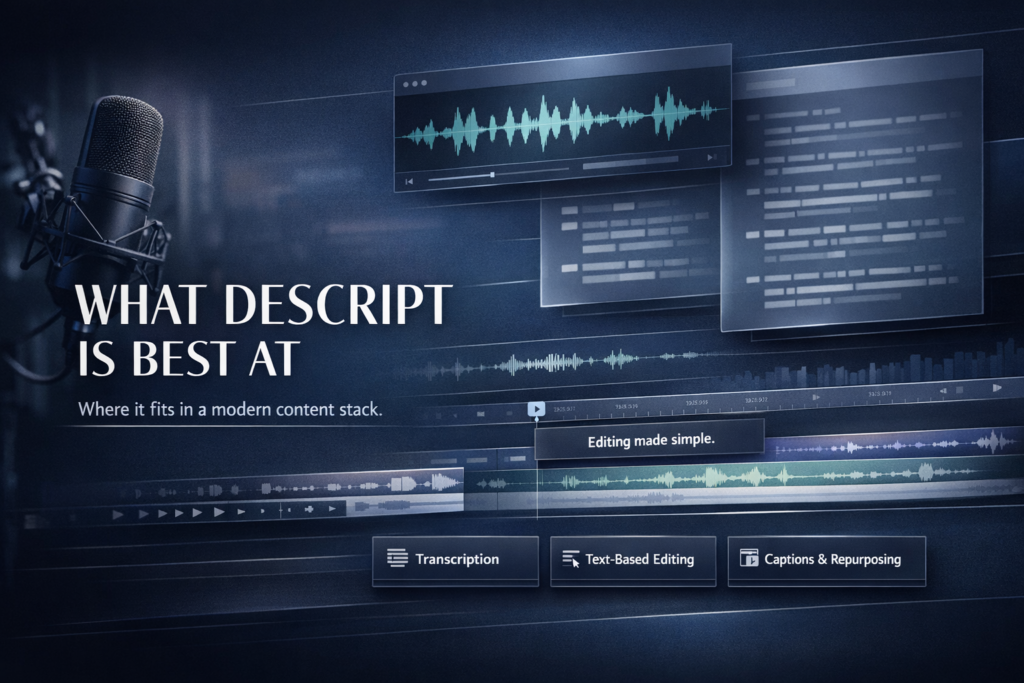
Descript automatically transcribes audio and video, then lets users edit the media through the transcript itself. That makes it especially useful for workflows where teams want to cut interviews, generate captions, clean up recorded content, and repurpose long-form media into shorter assets. Descript’s own help docs emphasize automatic transcription, text-based editing, captions, and searchability of media.
That makes Descript especially strong for:
- podcasts
- webinar repurposing
- social video clips
- caption workflows
- founder videos
- internal content pipelines that start from spoken content
Where teams often misuse Descript is by expecting it to solve the whole content strategy problem. It does not. Descript helps with the media production workflow, not the broader questions of brand messaging, funnel strategy, offer positioning, or content governance.
That distinction matters.
A healthy content stack might use:
- Descript for turning spoken media into usable assets
- Jasper or another AI content layer for draft generation and consistency
- a CRM or automation platform for distribution and nurturing
- human review for tone, quality, and strategic fit
So is Descript worth using?
Yes — if your business records enough audio or video that editing, clipping, captioning, and reuse are becoming a bottleneck. No — if your biggest issue is not media handling, but strategy, messaging, or conversion.
Descript is not the brain of the stack. It is the production layer that makes media easier to process.